Toronto & GTA Real Estate in 2025: Did the Market Actually Crash?
by Fawad Nissari

Did the Toronto & GTA market crash in 2025?
Short answer: no headline-style crash.
Long answer: if you were a seller, it sure felt like one.
Let’s break down what actually happened in the GTA real estate market in 2025, why prices quietly slid more than most people realize, and what this means as we head into 2026. I’ll also touch on Milton specifically, because that’s where the gap between headlines and reality was especially big.
If you want a broader snapshot as you read, this ties closely into the overall Milton real estate market and how it’s been shifting over the last couple of years.
Prefer to watch instead of read? Here’s the full breakdown in video form.
Rates Came Down… So Why Didn’t the Market Take Off?
Going into 2025, there was real optimism.
By the end of 2024, the Bank of Canada policy rate sat around 3.25%. Over the course of 2025, we saw four rate cuts, bringing it down to roughly 2.25% by the fall. That’s a full 1% drop in one year, which is meaningful in real estate terms.
Early on, it worked:
-
Buyers started booking showings again
-
Conversations picked up
-
It finally felt like pressure was easing compared to 2023 and early 2024
Then the mood shifted.
Trade and tariff headlines hit early in the year, and suddenly the conversation changed from “maybe this is the year” to “let’s wait and see.” Rate cuts stopped feeling like a green light and started feeling like a warning sign.
-
Buyers thought: Rates are coming down, but the economy feels shaky. Why rush?
-
Sellers thought: Rates are improving. Demand should come back. I’m not cutting my price.
That standoff defined most of 2025.
Sales Stayed Low, Inventory Kept Building
Once hesitation set in, it showed up in the numbers fast.
Total home sales across the GTA ended 2025 at roughly 62,000 transactions, about 10% lower than 2024, making it one of the slowest years in decades. Even the spring market—normally when activity spikes—felt muted.
At the same time, listings kept piling up:
-
Active listings were up roughly 25% year-over-year
-
Durham, Peel, Halton, and Toronto all felt it
-
Buyers suddenly had options again
Months of inventory quietly climbed:
-
Low-rise homes hovered around 5 months
-
Condos pushed closer to 7 months
That’s when leverage shifted. Not dramatically. Not with panic. But enough that buyers could slow down—and sellers had to start adjusting expectations.
Homes that were priced right in strong neighbourhoods still sold. Everything else sat. Sometimes for a very long time.
The Part Headlines Missed: Price Drops Were Much Bigger Than “-6%”
This is where 2025 gets misunderstood.
If you only look at GTA average prices, it looks like the market was down around 5–7% year-over-year. That’s why you hear people say, “See? No crash.”
But averages hide reality.
When you break things down by area and property type, especially detached homes, the drop was far more dramatic—particularly in the second half of the year.
Here’s what actually happened over a 12-month stretch:
-
Central Toronto detached homes: ~$295,000 drop
-
Mississauga detached homes: ~$150,000 drop
-
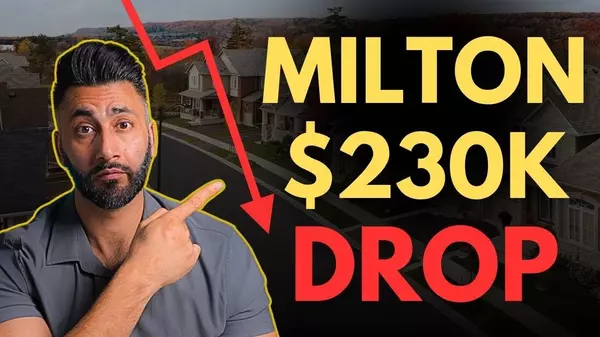
Milton detached homes: ~$230,000 drop
That’s not a rounding error. And sellers absolutely felt it.
This is why understanding Milton market conditions matters more than watching GTA-wide averages. The lived experience on the ground was very different.
Rentals Quietly Changed Buyer Behaviour Too
The rental market played a bigger role than most people realized.
In 2025:
-
Rent growth stalled in many parts of the GTA
-
Condo rents actually came down in some areas
-
Listings sat longer
-
Tenants had leverage again
When renting doesn’t feel like it’s getting worse every month, buyers don’t feel pressured to stretch. That took urgency out of the purchase market and reinforced the same theme we saw all year: hesitation.
A Tale of Two Halves in 2025
If you split 2025 in half, they felt completely different.
First half:
-
Hope
-
Rate cuts
-
Buyers watching
-
Sellers optimistic
Second half:
-
Reality
-
Sales didn’t rebound
-
Inventory stayed elevated
-
Price reductions became more obvious
-
Buyers weren’t in a rush
-
Sellers were tired of waiting
The year ended quietly, without a clear resolution.
What This Means for Sellers Heading Into 2026
This is the key takeaway:
2025 didn’t look like a crash in the headlines, but for many sellers—especially detached homeowners—it absolutely felt like one.
When a home loses $200,000 to $300,000 in a year, that’s real, even if the averages don’t scream it.
If you’re thinking about selling, strategy matters more than ever:
-
Pricing has to reflect today’s reality, not yesterday’s peak
-
Presentation matters because buyers have options
-
Timing and positioning matter more than optimism
If you’re trying to figure out how to sell your home in Milton in this kind of environment, this Milton home selling guide walks through what actually works when the market is hesitant.
What This Means for Buyers
For buyers, 2025 quietly shifted leverage back in your favour:
-
Negotiations are normal again
-
Conditions are back
-
You can take your time
-
Detached prices, especially in Milton and surrounding areas, have reset meaningfully
That doesn’t mean prices will keep falling forever—but it does mean you’re no longer competing in the same market we saw a few years ago.
Key Takeaways
-
2025 wasn’t a headline crash, but it was a real correction
-
Rate cuts helped affordability but didn’t restore confidence
-
Sales stayed historically low while inventory climbed
-
Detached homes saw much deeper price drops than averages suggest
-
Milton was hit harder than many people realize
-
Hesitation—not panic—defined the year
If you’re trying to make sense of what all this means for your situation heading into 2026, context matters. The market you remember isn’t the market we’re in right now—and pretending otherwise is how people get stuck.
If you want to talk through your numbers or timing without pressure, that conversation is usually where clarity starts.
Recent Posts